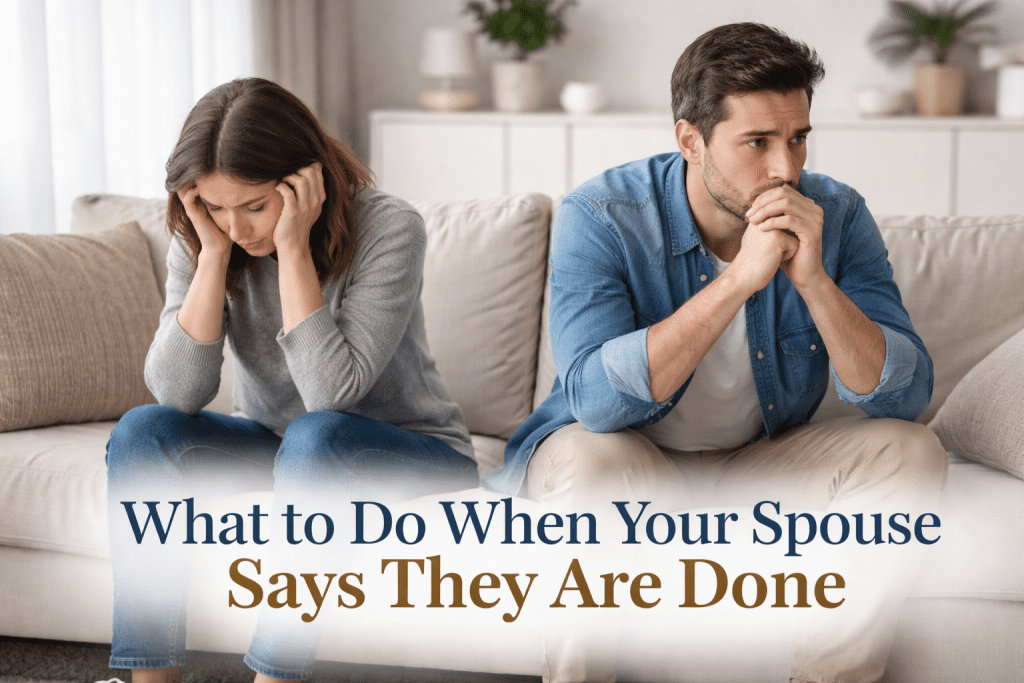
How to Know Whether Your Relationship Can Be Repaired
When a relationship hurts one of the hardest questions to ask is also one of the most important:
Should I stay, or should I go?
If you are asking yourself that question, chances are you are exhausted. Maybe you have been disappointed too many times. Maybe communication has broken down. Maybe anger has become the main way the two of you speak to one another. Or maybe you still love your partner, but you no longer feel emotionally safe, connected, or understood. This is a painful place to be. But it is also a place where clarity can begin.
Over the years, I have worked with many couples and individuals who felt stuck between hope and discouragement. One part of them wanted to fight for the relationship. Another part wanted relief from the pain. If that is where you are right now, I want you to know that you do not have to make this decision in the middle of panic, anger, or emotional overload.
The better question is often not just, “Should I stay or go?”
It is:Is this relationship still capable of becoming healthy?
Don’t Make a Permanent Decision in a Temporary Emotional Storm
Many people make relationship decisions when they are flooded with emotion. After a major fight, a betrayal, or a long period of resentment, it is easy to feel that the only two choices are to leave immediately or to remain miserable forever. That is usually not true.
Before making a final decision, it helps to slow things down and honestly assess what is happening. Some relationships are deeply distressed but still repairable. Others have crossed lines that make staying unsafe or deeply damaging. The challenge is learning the difference.
Signs the Relationship May Still Be Repairable
1. There is still emotional investment
If one or both of you still care deeply, even if that caring is mixed with anger, hurt, or frustration, that matters. Indifference is often harder to work with than conflict.
2. There is at least some willingness to reflect
Can either of you say, “I know I’ve contributed to this problem”? If one or both partners can take responsibility, that creates a starting point.
3. The conflict is painful, but not always destructive
There is a difference between arguing and emotionally demolishing each other. If the relationship still has moments of kindness, concern, and shared effort, that is important.
4. The two of you have not lost the ability to learn
Healthy relationships are not built by finding the perfect partner. They are built by learning better ways to communicate, manage anger, and negotiate differences.
5. There is a desire to understand, not just to win
If the goal is still connection rather than punishment, healing is much more possible.
Signs You Need to Take Your Concerns Very Seriously
You may need to step back, seek help, or reconsider the relationship if there is:
- ongoing emotional abuse
- physical intimidation or violence
- repeated betrayal with no accountability
- addiction that is being denied or actively protected
- chronic contempt, humiliation, or demeaning behavior
- complete refusal to address serious problems
- fear of speaking honestly because of the other person’s reaction
A relationship should not require you to disappear in order to keep it going. Sometimes people tell themselves, “If I just love harder, explain better, or become more patient, things will change.” But a healthy relationship cannot be rebuilt by one person doing all the emotional work while the other avoids responsibility.
Ask Yourself These Questions
If you are struggling with whether to stay or go, take some quiet time and ask yourself:
- Do I feel more like myself in this relationship, or less?
- Is there pain here that can be worked through, or damage that keeps repeating?
- Does my partner show any real openness to change?
- When we try to talk, do things improve at all, or always get worse?
- Am I staying because of love, or because of fear?
- If nothing changed over the next year, would I want to remain in this relationship?
These are not easy questions. But they can bring you closer to the truth.
Sometimes the Relationship Is Not Over, But the Old Version of It Is
You may not be deciding whether the relationship lives or dies.
You may be deciding whether the old version of the relationship has to end so that a healthier one can begin.That means some things may need to stop:
- old patterns of blame
- repeating the same argument in different forms
- unmanaged anger
- avoiding difficult truths
- expecting your partner to read your mind
- trying to “win” instead of trying to connect
A relationship that survives serious trouble usually does not go back to what it was before. It has to become something better.
What If Only One of You Wants Help?
Many people delay getting support because their spouse or partner refuses counseling. But even if only one of you is willing to begin, that does not mean nothing can improve.
In some cases, one person changing the way they communicate, respond to anger, hold boundaries, and approach conflict can begin to shift the whole dynamic. At the very least, it can help you think more clearly and make better decisions.
If your partner is not ready, that should not stop you from getting guidance.
Leaving Is Not Always Failure, and Staying Is Not Always Strength
Some people stay too long because they do not want to feel they “failed.”
Others leave too quickly because they are overwhelmed and cannot imagine a path forward.Neither staying nor leaving automatically makes you wise.
What matters is whether your decision is based on honesty, emotional clarity, and a realistic understanding of what can and cannot change.Sometimes courage means fighting for the relationship.
Sometimes courage means accepting that the relationship is no longer healthy enough to save.The Goal Is Not Keeping the Relationship The Goal Is Building Something Healthier
I believe many relationships can be repaired. But not by wishful thinking, blame, or endless circular arguments.
They improve when people learn better tools.
Better communication.
Better anger reduction.
Better listening.
Better negotiation.
Better ways of repairing hurt.If you are asking, “Should I stay or should I go?” you may not need an immediate answer as much as you need a clearer process for finding the right one.
Final Thought
Do not make one of the biggest decisions of your life based only on exhaustion. Look at the patterns honestly.
And ask whether this relationship still contains the willingness, humility, and emotional ability to become something healthier than it has been.Sometimes the answer is yes. Sometimes the answer is no.
But either way, clarity is better than confusion, and thoughtful action is better than suffering in silence.If you are in New Jersey and struggling to decide whether your marriage or relationship can be saved, marriage counseling can help you sort through the pain, the patterns, and the possibilities with greater clarity.
Category: Blogs
-

Should I Stay or Should I Go?
-

What Part Can AI play in Couples Counseling?
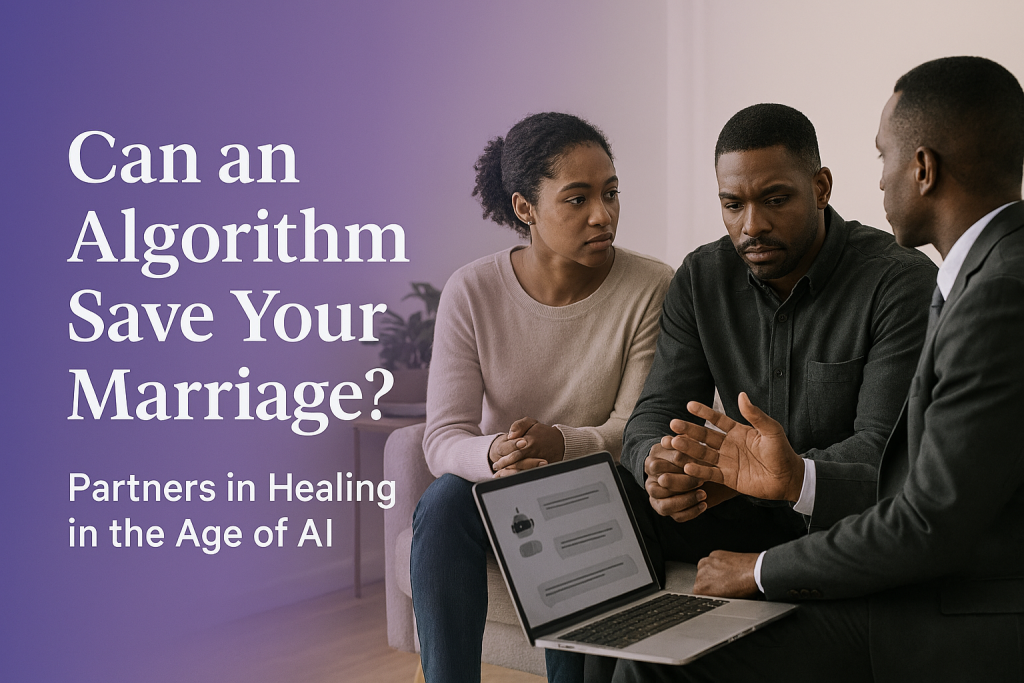
PARTNERS IN HEALING in THE AGE OF AI
Can AI or An Algorithm Save Your Marriage?
Artificial Intelligence is rapidly changing how people seek advice, including help for their relationships. With AI relationship apps and chatbots everywhere, many couples wonder:
Can an algorithm really save a marriage?
After more than 30 years as a marriage and couples counselor, with three graduate degrees and decades of clinical experience, my answer is simple:
AI can support the healing process—but it cannot replace an experienced human therapist.
How AI Can Support Modern Marriage Counseling
I’m still learning and any skilled clinician will say the same. That’s why I see AI not as competition, but as a tool when used thoughtfully and ethically by a trained professional.
AI can help by:
- Providing broader perspectives on evidence‑based approaches such as EFT, CBT, and attachment‑focused therapy
- Engaging therapists in strategic discussions about patterns, communication breakdowns, and skill‑building
- Reinforcing empathic language, helping clinicians stay mindful of tone and validation
Used correctly, AI can complement clinical experience and extend therapeutic insight but it stops there.
What AI Can Never Replace in Marriage Counseling
Marriage counseling is deeply human. No algorithm can replicate what happens in a room filled with real emotion.
Reading Non‑Verbal Cues
I can notice facial expressions, posture shifts, tone changes, and emotional withdrawal often before a word is spoken. These cues are critical to effective intervention.
Responding to the Moment
Therapy is not scripted. An experienced counselor chooses different tools in real time based on safety, readiness, trauma history, and the emotional dynamic of the couple.
Hearing the Subtleties
Meaning often lives between the words. A pause, a repeated phrase, or a quick deflection can reveal unresolved hurt or fear, things AI is likely to miss.
Human Compassion
There is no substitute for presence, empathy, and lived understanding. Healing relationships requires attunement, not automation.
AI Is a Tool—Not a Therapist
AI can point toward healing, but it takes clinical wisdom to know how and when to use it. Without professional experience, AI risks oversimplifying complex emotional issues or missing critical red flags.
That’s why the future of marriage counseling isn’t replacement—it’s responsible partnership.
Real Help Requires Real Connection
If your relationship feels stuck, disconnected, or overwhelmed, you don’t just need advice—you need guidance that is tailored, compassionate, and grounded in experience.
Learn more about working with a seasoned marriage counselor at https://yourmarriagecounselor.com
Ready to Take the First Step?
If you’re looking for a focused, structured way to jump‑start real change, explore Dr. Marty’s proven Jump Start Program for Couples: https://yourmarriagecounselor.com/jump-start
Because while technology can assist, healing happens in human connection.
-

Frequently Asked Questions About Couples Counseling

FAQs About Marriage Counseling
What are the key components of effective marriage counseling?
Good marriage counseling has several parts to it. The first part is opening up lines of communication where there isn’t a winner or a loser. The goal is for both partners to communicate with each other. This involves learning strategies and techniques to influence your partner and help them feel that you care about them. The second part is healing any wounds that have occurred, often as a result of misunderstandings.
When should a couple seek counseling?
It’s time for counseling when negative interactions have a greater impact than positive ones. If there’s constant tension and arguments, a third person can help you feel understood. Counseling is needed when there’s a breakdown in communication and anger seems to dominate the relationship. Ultimately, a relationship is not in a good place if even one person feels wounded. It takes only one person to make it “not right” if they feel unheard, unloved, or misunderstood.
What are the biggest reasons couples struggle?
A lack of communication is a major issue; people often feel like they aren’t being heard or that their concerns aren’t given enough weight. Lack of time together is also a significant problem, as couples often become too busy with kids and work to prioritize their relationship. Other reasons for dissatisfaction include boredom from a lack of interesting or exciting shared activities, as well as a lack of sexual intimacy.
How long does marriage counseling typically take?
There is no average timeline for how long counseling takes. The length of therapy is “tremendously shortened” by how much couples work on things between sessions. This “homework” includes spending time together, surprising each other, and being intimate. The more active a couple is between sessions, the quicker they tend to see results.
What if only one person wants to go to counseling?
If one person is reluctant to attend, the other person can take the lead by attending therapy on their own. By modeling positive changes and showing that you are trying and that you care, you can motivate your partner to change as well. When your partner feels that you are changing, it’s a great motivator for them to want to change too. Over time, they may become touched by your efforts and sign on to be a part of the counseling process.
Is virtual or online counseling as effective as in-person sessions?
Virtual therapy tends to solve the problem of a lack of time, which is often a bigger issue than a lack of money. It provides convenience, allowing you to have a session from your living room, car, or even bedroom, making it easier to meet consistently. This consistency is crucial for making progress. When it’s inconvenient, people tend to find reasons not to connect, which can make therapy “choppy” and ineffective.
How do I choose the right marriage counselor?
When you make the first contact with a potential counselor, don’t immediately make an appointment. Instead, gather information and then step back to think about how you felt during the interaction. Ask yourself:
- Did you feel listened to and understood?
- Did the counselor make you feel defensive or scolded, or did they seem to understand you?
- What is their strategy for approaching the problem?
- Do they seem patient and do their suggestions make sense?
Trust your feelings and take the time to evaluate the connection before committing to a first session.
-

What to Expect from Marriage Counseling: Beyond the Basics

Marriage counseling is a process designed to help couples build a stronger, healthier relationship. While it’s commonly known to focus on communication and healing, here are some additional points to consider about the process, what it entails, and what makes it successful:
- A High Success Rate: Research shows that 78% of people in counseling tend to return to a more constructive relationship. People often want to do the right thing but lack the “how-to” knowledge, and a good counselor’s job is to teach them respectful and constructive ways to interact.
- The Power of One: If one partner is reluctant to attend counseling, the other can start the process on their own. By demonstrating positive changes and showing they care, they can often influence their partner to join later. This is based on the idea that when one person lets go of the tension, the dynamic can shift for the better. The crucial part is to show, not just tell, your partner that you have changed.
- The Importance of “Homework”: The length of therapy is directly related to how actively couples engage in the work between sessions. This “homework” can include things like spending time together, surprising each other, and being intimate. The more people are willing to make changes outside of the session, the more quickly they will see results.
- The Dangers of Leaving Unresolved Issues: It is important to realize that breaking up is not the answer. If couples don’t resolve their issues before ending a relationship, they are likely to take the same problems with them into the next one. The solution is to work with the relationship you have and to own your own responsibility for your actions.
- Beyond the Office: The meaning of any communication is how it’s heard, not what’s intended. A counselor’s role is to provide a safe atmosphere where couples can say things without fear of reprisal, leading to a better understanding of what was truly meant.
- The Convenience of Virtual Counseling: One of the biggest obstacles to counseling is a lack of time. Virtual therapy helps solve this problem by making it convenient to meet regularly from almost anywhere, such as your living room or car. This consistency is vital for making progress.
- Therapy Starts Before the First Session: The counselor asks couples to rehearse the session beforehand to prioritize what’s important. This negotiation process can be a form of therapy in itself, as it requires partners to communicate and deal with different perspectives before the session even begins.
- Skills You Will Learn: Counseling teaches valuable skills like emotional regulation—learning to calm yourself down when you’re upset. You will also learn self-awareness, self-control, empathy, and how to give your partner the benefit of the doubt. The goal is to make your partner feel better, rather than just winning an argument
-

Emotional Intelligence Part 5
I will explain the significance of the questions asked in Blog 4 (Emotional Intelligence Part 4).
1. How often to you stop and check in with yourself about how you are feeling emotionally and physically?
Think it’s easy to identify your feelings try and find 3 words that describe how you are feeling at any given time especially if there is conflict or disappointment.
If you rated 6 or less you need work on the area of emotional intelligence of self awareness
Self awareness is important because you can use that information to put yourself in the best emotional space to use effective strategies. The more upset or tired you are the worse is your judgement and effectiveness.
2. When I am very upset with my partner I focus on healing and balancing myself
If you rated 6 or more you need work on the area
of emotional intelligence of self care and emotional regulation, the more you take of your self the more likely you are to have control of your emotions. Attacking someone has never made things better in a relationship.
3. How often do you loose your temper when there is a disagreement.
If you rated 6 or more you need work on the area of emotional intelligence of self regulation. It is clear that the more intense the negative feelings the less effective is the communication.
4. How well do you understand your partner’s feelings
If you rated 6 or more you need work on the area of emotional intelligence of Empathy. When your partner feels you understand them they are far more likely to gain connection with you and you are in the best place to influence them.
5. Do you allow the other person time to “cool down” or do you go into attack mode?
If you rated 6 or more you need work on the area of emotional intelligence of conflict management. Understanding your partner’s emotional need to calm down and regroup is a major step toward being empathetic even when you don’t agree.
6. How often do you shut down and withdraw?
If you rated 6 or more you need work on the area of emotional intelligence of effective communication. Waiting until both of you are calm to discuss issues is a good thing; however, withdrawal makes things worse. Issues don’t go away on their own, when ignored they usually get worse.
7. I can depend on myself and know how to take care of my self in a kind way.
You can’t always depend on your partner to do or say the right thing, even the best person has sensitive subjects and bad days
If you rated 6 or more you need work on the area of emotional intelligence of knowing how to manage conflict, which will move from arguments to negotiation with your your partner
Even if you feel they are bad or wrong, pointing that out and then focusing on that will probably generate a defensive response that results in a counter attack or withdrawal or both behaviors. We know that people tend to respond negatively to hostility and have a better chance of coming around in an atmosphere that is calm and that feels safe.
8. How much do you own your part in an argument and the reason for your strong response- without trying to justify it by saying “but”?
If you rated 6 or more you need work on the area of emotional intelligence of self awareness. Talking about what’s going on with you rather than arguing your point, is much more likely to shed light than heat.
9. When you get upset with your partner do you allow them to speak without interrupting them?
If you rated 6 or more you need work on the area of emotional intelligence of self regulation.
10. If you rated 6 or more you need work on the area of emotional intelligence of understanding, not necessary, agreeing with them. The emotional skill is empathy, often times the more understanding we give the more understanding we get.
Conclusion
The work of relationship, couples, & Marriage Counseling is to help you to learn and use the many strategies available to improve your emotional intelligence and to help you heal and strengthen your relationship.
EI is essential tp having a happy and satisfying relationship
The emotionally intelligent person asks themselves: Is the argument more important than the relationship?
-

Cognitive Behavior Therapy (CBT): In Couples & Marriage Counseling

Cognitive Behavior Therapy, known as CBT, focuses on issues that a couple is facing currently. CBT does not get lost in the past but endeavors to focus on the present with a goal of building a better future. The past may be discussed or referenced, but only as much as it is necessary to understand the present. It is not dwelled on. This approach will see the counselor taking an active role to teach positive ways to relate to your partner during sessions as a trial run for using those approaches outside of therapy.
How Effective is Cognitive Behavioral Therapy (CBT)?
CBT is a short-term therapy based on thousands of hours of research findings. Google, the internet Guru says: CBT is 50 – 75% effective.People who come to the office are very worried about the future of their relationship and they want specific tools and strategies, CBT offers them that type of therapeutic approach. It is a valuable resource that can help a couple to get past the rough spots they are struggling with.
This article will go into depth about exactly what’s involved in CBT for folks in committed relationships.
A Dive Into CBT: We Will Explore

- What exactly is CBT?
- What Does CBT Do To Help A Relationship?
- What does it focus on?
- How does CBT actually work “it’s magic”?
- What are the “tools” that CBT uses?
What CBT Does To Help A Relationship.
- It identifies problems clearly
- It teaches couples to become aware of automatic negative thoughts, which become self-fulfilling prophecies
- It helps people distinguish between facts and irrational assumptions
- It teaches couples how to get past negative history that affects present feelings and beliefs
- It shows individuals how not to catastrophize
- It teaches couples to view a situation from different points of view
- It teaches how to understand other people’s actions and motivations
- It helps develop a more positive way of thinking and seeing situations
- It increases self-awareness of feelings and moods
- It teaches people how to manage expectations
- Couples learn not to generalize and have all-or-nothing thinking
- Take responsibility for their action
- CBT helps people face their fears rather than avoid them
- People are encouraged to understand their partner rather than judge them.
Working Definition of CBT
CBT develops goals for both individuals and for the couple. Cognitive Behavioral Therapy needs an individual’s active participation both during and between sessions. It deals with: issues, thoughts, and behaviors that are happening today.How CBT works.
We all have stories or narratives in our head. CBT helps us to identify those stories and helps us to create new ones. For example, you might think your partner is angry with you. Then you build a whole story around that assumption and consequently act as if they are angry with you. In reality, what is happening is that they are tired and had a bad day at work. This is where learning communication skills can help reduce friction and help bring a couple together; for example, learning to keep communication short and focused as well as spending as much time listening as you do talking.
CBT teaches couples how to approach each other so as to minimize a defensive response so that differences of opinion become discussions, not arguments.
CBT shows couples how to get a negative message across without their partner feeling attacked. It shows people how to recognize and deal with difficult feelings like anger, rejection, and sadness. It is well constructed to help a couple get past resentment of past history, The practicing of CBT creates a close relationship, one marked by a warm friendship that is caring and respectful of each other.
Anger Management/ Anger Reduction
When couples get to the stage of coming into my office most of them have some level of anger. Though anger is a valid and common feeling, too much of it will sabotage and stop constructive communication and will make it impossible for a couple to reconnect, so it is important that a couple learn how to deal with any anger that overshadows the connection in the relationship.
Dealing with anger is usually identified as “Anger Management” I like to think of it as “Anger Reduction” I want to focus on what needs to be done to reduce your anger, more than to help you manage your anger.
4 Important Tools of CBT
Much of the work/progress of CBT is done outside of the office. When a session ends I will give couples specially designed assignments to do between sessions. For example: Find something that you appreciate about your partner and tell them once a day. Too often couples take each other for granted, this assignment begins to encourage the positive awareness of each other.
- Journaling
Too often days slip by unnoticed except for negative exchanges. Even in these exchanges the couple forgets the issue but remembers the bad feelings. Journaling helps couples remember things more accurately so that strategies can be developed to deal with negative situations when they occur. Also, journaling helps people develop insight as they have to stop and reflect to make entries in their notes.
- Relaxation Techniques
If folks are stressed they will probably not behave well. They are more likely to be negative, angry, or withdrawn. Learning how to be calm is a great starting point for connecting with your partner.
- Increase of Emotional Intelligence.
It is helpful for a strong relationship to be emotionally intelligent; that is to be sensitive to feelings that are going on inside of ourselves and with our partner. Emotional Intelligence allows couples to learn how to handle their own impulses and how to react in a constructive way to our partner’s negative response.
Though CBT is not an answer for everyone its techniques can go a long way to help bring a couple together.
-

Marriage Counselor Near Me Needed? Or Could it be Online Counseling?

In the digital age, the way we seek professional help is evolving rapidly, and marriage counseling is no exception. While traditional in-person counseling has been the go-to choice for couples seeking guidance, the advent of online marriage counseling has opened up new, convenient, and highly effective avenues for relationship support. Let’s explore the numerous benefits of online marriage counseling and why it may be the ideal solution for many couples.
- Convenience at Your Fingertips:
Online marriage counseling offers the ultimate convenience. It allows couples to access professional help from the comfort of their own homes or any location with internet connectivity. This eliminates the need for time-consuming commutes and the stress of finding a “marriage counselor near me.” As a result, online counseling is a superb solution for busy couples, parents with young children, or those who live in remote areas.
- Privacy and Comfort:
In an online counseling setting, couples can open up in the privacy of their own environment. There’s no need to worry about bumping into acquaintances in the waiting room or sharing potentially sensitive details in an unfamiliar office. The comfort and privacy of online sessions can foster a more open and honest dialogue between partners and their therapist.
- A Wider Selection of Therapists:
Online counseling breaks down geographical barriers, allowing you to choose from a broader pool of therapists, assuming they are licensed and credentialed in your area. This means you’re not limited to the professionals in your immediate vicinity, and you can select a counselor or relationship coach whose expertise and approach best align with your needs and preferences.
- Cost-Effective:
Traditional in-person counseling often comes with additional expenses, such as transportation costs and office space fees, which can add up over time. Online counseling can be a more budget-friendly option, making it accessible to a broader range of couples who may be concerned about the financial aspect of counseling.
- Flexible Scheduling:
Online marriage counseling offers more flexible scheduling options. When urgent or emergency situations arise, it is easier to handle those issues right away virtually, instead of waiting for an appointment in person. Dr. Marty Tashman of New Jersey offers emergency sessions and actually blocks off time each day to help with emergency issues via online counseling.Couples can book sessions at times that suit their schedules, including evenings and weekends. This flexibility ensures that counseling doesn’t interfere with work, family, or other obligations.
- Consistent Support:
Online counseling platforms often offer messaging or email support between sessions, which can be highly beneficial for couples. This consistent support can help address immediate concerns and maintain the progress made during sessions.
- Effective Communication Skills:
In a world that relies increasingly on digital communication, online counseling can help couples develop and enhance their communication skills, which are vital for a successful marriage. Learning to express thoughts and emotions effectively online can translate into improved offline communication as well.
- Emergency Access:
Online marriage counseling can provide quick access to professional help in times of crisis or heightened emotional turmoil. In-person sessions may not be as readily available during emergencies, making online counseling a practical and immediate solution.
Conclusion
The world of marriage counseling is evolving, and online counseling is proving to be a game-changer. It offers numerous advantages, from convenience and affordability to a broader selection of therapists and enhanced privacy. The ability to access professional help from the comfort of your own home can make the counseling process less intimidating and more effective for many couples.
While in-person counseling remains a valuable option, it’s essential to consider the benefits of online marriage counseling when making a decision. The choice between the two ultimately depends on your unique circumstances and what you’re most comfortable with. Whether you seek traditional in-person counseling or choose the modern convenience of online counseling, the most important aspect is that you take proactive steps to strengthen your relationship and prioritize your marriage’s health and happiness.
-

Rebuilding Trust: Ideas to Overcome Infidelity

Introduction: Infidelity can shatter the very foundation of trust in a relationship, leaving partners feeling betrayed, hurt, and lost. Yet, amidst the turmoil, there is hope. Reconciliation is possible, but it requires patience, empathy, and a willingness to confront uncomfortable truths. As marriage counselors, we understand the complexities of infidelity and are here to guide you through the journey of healing and rebuilding trust in your relationship.
Understanding the Impact: Infidelity isn’t just a breach of fidelity; it’s a breach of trust, respect, and emotional intimacy. It sends shockwaves through the relationship, leaving both partners grappling with a myriad of emotions – anger, sadness, guilt, and confusion. Understanding the profound impact of infidelity is the first step towards healing. It’s essential to acknowledge the pain and devastation caused by the betrayal before you can begin to move forward.
Communication is Key: Effective communication is the cornerstone of any successful relationship, especially when navigating the aftermath of infidelity. Both partners must be willing to engage in open, honest, and non-judgmental dialogue. This means creating a safe space where each person can express their feelings, concerns, and needs without fear of retribution. As marriage counselors, we facilitate these conversations, helping couples uncover the root causes of the infidelity and work towards resolution.
Rebuilding Trust: Rebuilding trust after infidelity is a gradual and often arduous process. It requires both partners to demonstrate honesty, transparency, and accountability in their actions. Trust isn’t rebuilt overnight; it’s nurtured through consistent effort and commitment. As marriage counselors, we provide couples with practical strategies for rebuilding trust, such as setting clear boundaries, practicing forgiveness, and engaging in regular check-ins to address any lingering doubts or insecurities.
Healing Wounds: Healing from infidelity isn’t just about repairing the relationship; it’s also about healing individual wounds. Both partners may be grappling with feelings of inadequacy, shame, or self-doubt, which can hinder the healing process. As marriage counselors, we help couples navigate these complex emotions, providing them with the tools and support they need to heal both individually and as a couple. This may involve individual therapy, self-care practices, or couples counseling sessions tailored to their specific needs.
Moving Forward: While the scars of infidelity may never fully fade, they don’t have to define the future of your relationship. With dedication, patience, and a commitment to growth, couples can emerge from infidelity stronger and more resilient than ever before. As marriage counselors, we empower couples to envision a new future together, one built on a foundation of trust, honesty, and mutual respect. By embracing the lessons learned from the past and looking towards the future with hope and optimism, couples can forge a deeper, more meaningful connection that withstands the test of time.
Conclusion: Infidelity is undoubtedly one of the most challenging obstacles any relationship can face, but it’s not insurmountable. With the right guidance and support, couples can overcome infidelity and emerge from the experience stronger, wiser, and more deeply connected than ever before. As marriage counselors, we’re here to walk alongside you on this journey of healing and transformation, offering the tools, insights, and encouragement you need to rebuild trust and create a thriving, fulfilling relationship. Remember, healing takes time, but with patience, perseverance, and a willingness to confront the past, you can create a future filled with love, trust, and intimacy.